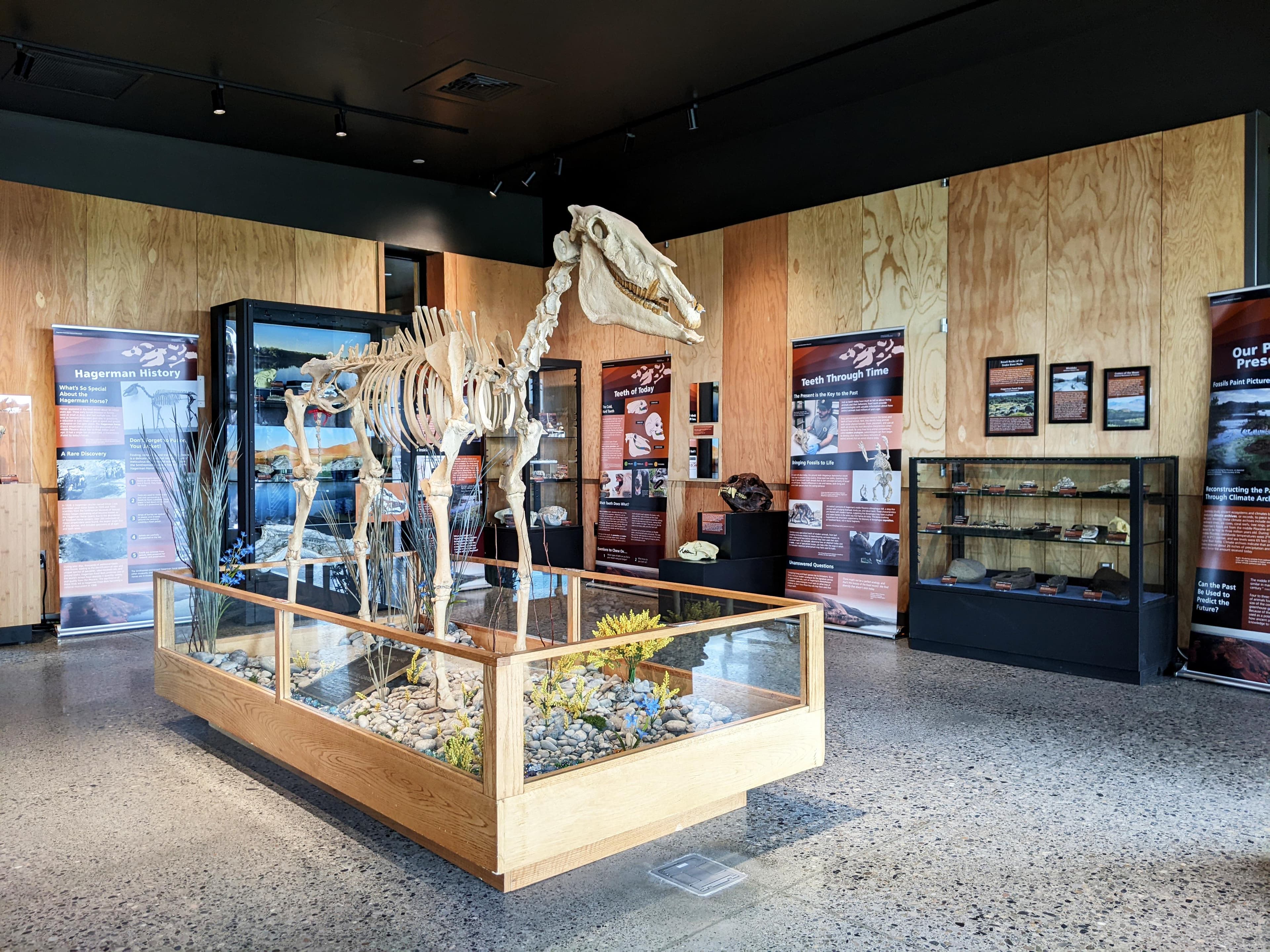
Hagerman Fossil Beds National Monument
Idaho
Tonight
🌓 65% moon
8.6 h fully dark
Crowds
low
Entrance
Free entry
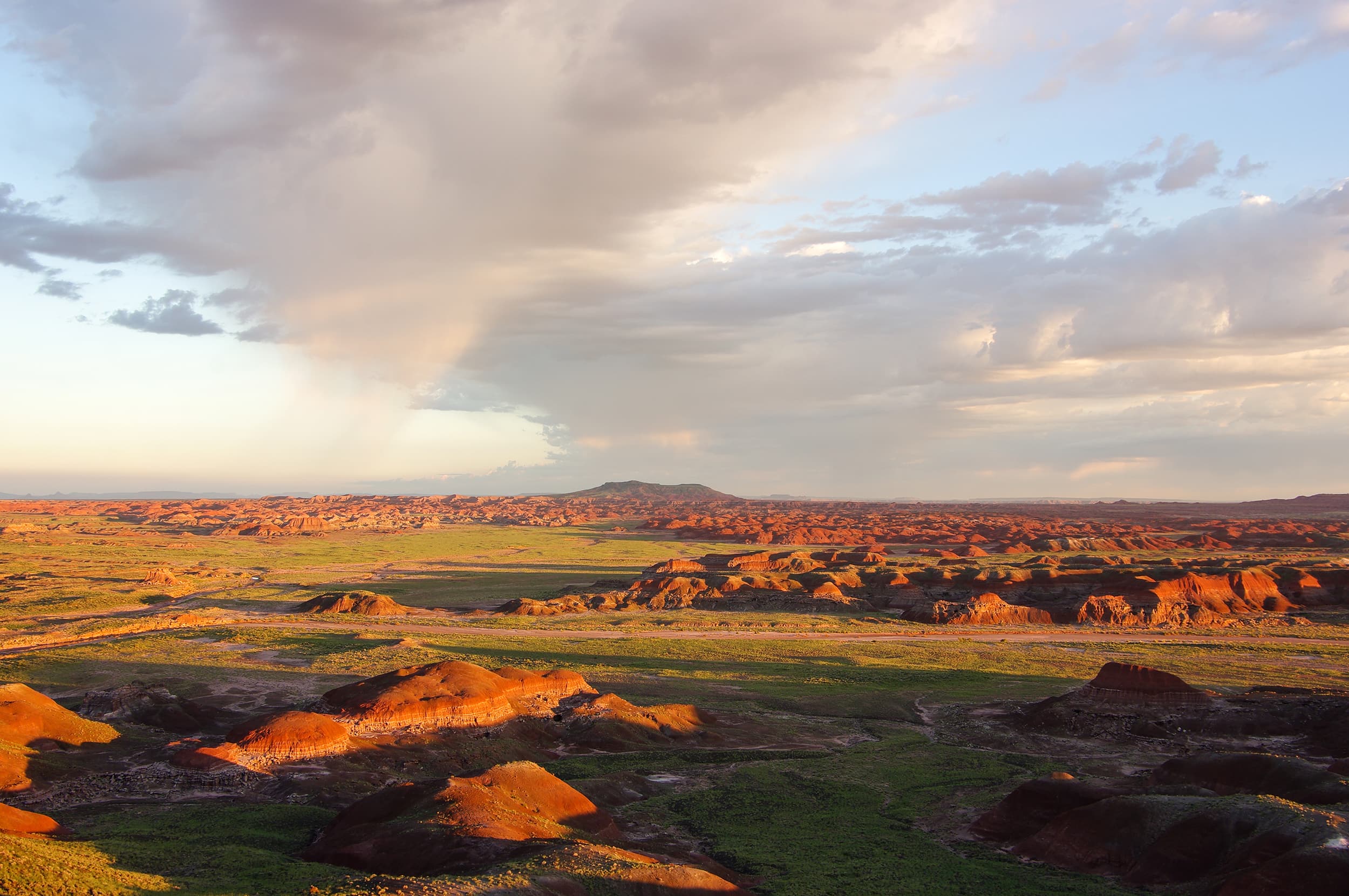
During the Pliocene, this place looked quite different. Lush wetlands, forests, and grasslands provided excellent habitat for a variety of animals. From fascinating, now-extinct creatures like the saber-toothed cat, mastodon, and ground sloth, to more familiar animals like horses, beavers, and birds, the scientific study of Pliocene fossils is the key to Hagerman.
Activities
Topics
No entrance fee.
Hours & seasons
The road leading to the Monument is a public road and is open 24 hours a day. Access to the Monument Overlooks closes at dusk. The Visitor Center has separate hours. Please be aware that the overlooks and trails are not maintained during winter.
Hours are reported by the park — verify before you go.
📞 2089334105
✉ hafo_information@nps.govConditions
Quietest months (fewer crowds): Jan, Feb, Nov, Dec
Typical crowds: low
Weather now: ☀️ Clear, 65°F
☀️ 79°/46°
☁️ 85°/50°
🌦️ 85°/59°
Typical monthly recreation visits · NPS avg 2023–2025 — orange months are the quietest by crowds.
Quietest months
Relative crowds by month — lighter is quieter; ringed months are the calmest by crowds.
Jan
4%
Feb
8%
Mar
20%
Apr
27%
May
52%
Jun
92%
Jul
100%
Aug
80%
Sep
51%
Oct
27%
Nov
8%
Dec
3%
Log a sky reading
Measured the sky with an SQM meter or app? Add your reading (16 = city glow … 22 = pristine). Opt in under “Travelers like you” to share it on the community leaderboard.
Things to do
Celebrate the Fire Horse
Birding in the Hagerman Valley
Enjoy a Picnic · 5 mi
Hike the Emigrant Trail · 3.25 mi · 560 ft gain
Become a Hagerman Fossil Beds Junior Ranger · 1 mi
See Fossils on Display · 1 mi
Take a Scenic Drive · 0.6 mi
Visitor centers
Thousand Springs Visitor Center
Accessibility
1 audio-described place(s)
Reported by the park — verify before you go.
Not an official safety source — always defer to NPS.gov and rangers for life-safety decisions.
By the numbers
A visual read on Hagerman Fossil Beds National Monument — its character, trails, sky, and weather.
Park fingerprint
How this park scores across the dimensions travelers care about.
Trail difficulty
Difficulty mix across this park's trails.
Trail profile
Each dot is a trail — distance vs. elevation gain, by difficulty.
3-day forecast
Daily high and low temperatures (°F).
Passport stamps
Mark the stamps you've collected — they show in your memory and along your routes.
🎫 Hagerman Fossil Beds National Monument, the Oregon Trail
🎫 Hagerman Fossil Beds, the Oregon Trail Overlook
🎫 Thousand Springs Visitor Center
Places to see
Hagerman Fossil Beds National Monument, the Oregon Trail
audio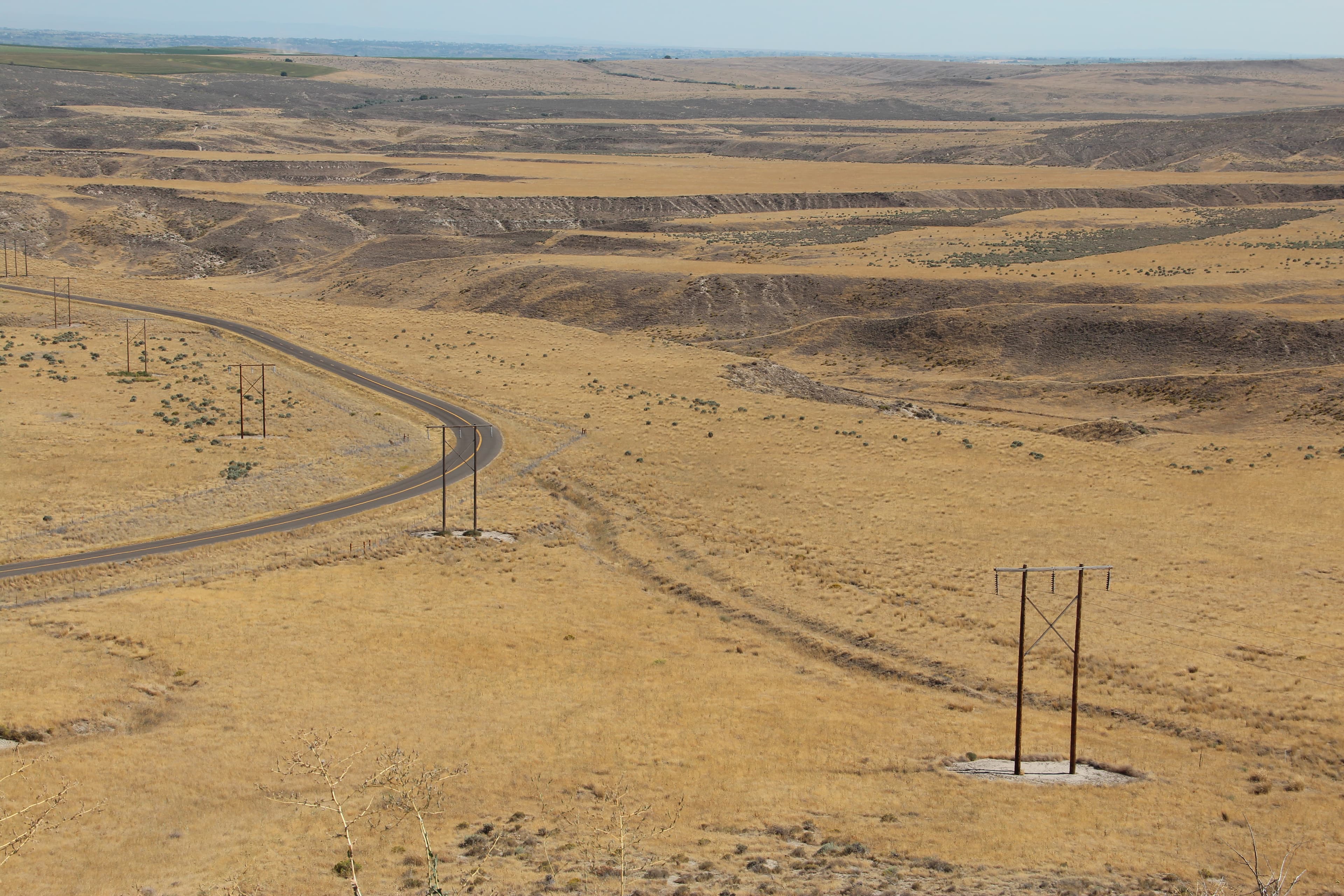
Hagerman Fossil Beds, the Oregon Trail Overlook
Audio & media
🎧
🎬
🖼
Learn more
After many years of planning, Hagerman Fossil Beds National Monument will soon see the construction of a Research and Curatorial Facility. The facility will include dedicated space for fossil preparation, which will allow visitors to observe the cleaning, repair and other conservation of Hagerman fossil specimens.
In 1934, Smithsonian paleontologists uncovered a completely new species of peccary at Hagerman Fossil Beds.
The Cenozoic Era (66 million years ago [MYA] through today) is the "Age of Mammals." North America’s characteristic landscapes began to develop during the Cenozoic. Birds and mammals rose in prominence after the extinction of giant reptiles. Common Cenozoic fossils include cat-like carnivores and early horses, as well as ice age woolly mammoths.
Across the US, changes in water availability are altering which plants grow where. These changes are evident at a broad scale. But not all areas experience the same climate in the same way, even within the boundaries of a single national park. A new dataset gives park managers a valuable tool for understanding why vegetation has changed and how it might change in the future under different climate-change scenarios.
Discover southern Idaho's hidden treasures, including Craters of the Moon National Monument and Preserve, City of Rocks National Reserve, Minidoka National Historic Site, and Hagerman Fossil Beds National Monument.
The 2015 National Park Service Fire Communication and Education Grant Program provided funding for projects, programs, or tasks in twelve parks around the country.
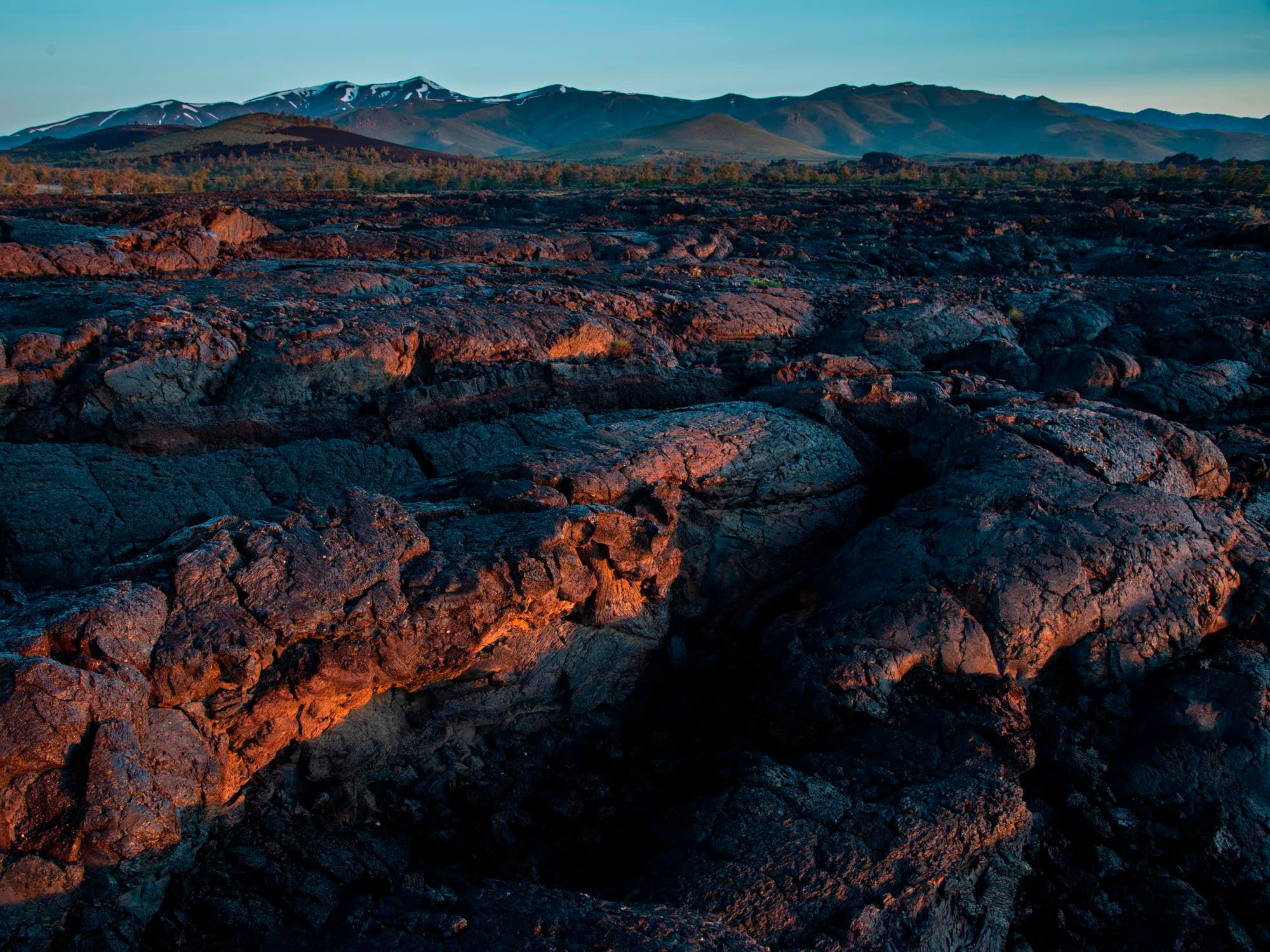
Fissure volcanoes erupt from elongated vents (fissures) rather than a central vent. The lava flows in Craters of the Moon National Monument were erupted from fissures.
Although the fossils of Hagerman Fossil Beds National Monument, Idaho, are sometimes treated as a single “snapshot” of geologic time, they actually represent more than a million years. U.S. Geological Survey geologist Laura Walkup has been working to uncover ash beds in the deposits to provide better age control.
Ranger School
Park-grounded courses you can learn with the Ranger.
Fossil Teeth: Changing Climates and Evolutionary Responses Preserved in the Fossil Record (Lesson Plan by Geoscientist-in-the-Park Gina Roberti)
Open →
Paleo Fossil Cookie Dig
Open →
Stratigraphic Column Formation Sandwich
Open →
How Hagerman Fossil Beds National Monument connects
This park's activities, topics, location, and on-the-ground places — one hop in the graph. Drag to explore; click an activity, topic, or related park to follow it.
Park
Activity
Topic
State
VisitorCenter
PassportStamp
Trail
ThingToDo
Similar parks
Share activities & topics with Hagerman Fossil Beds National Monument.