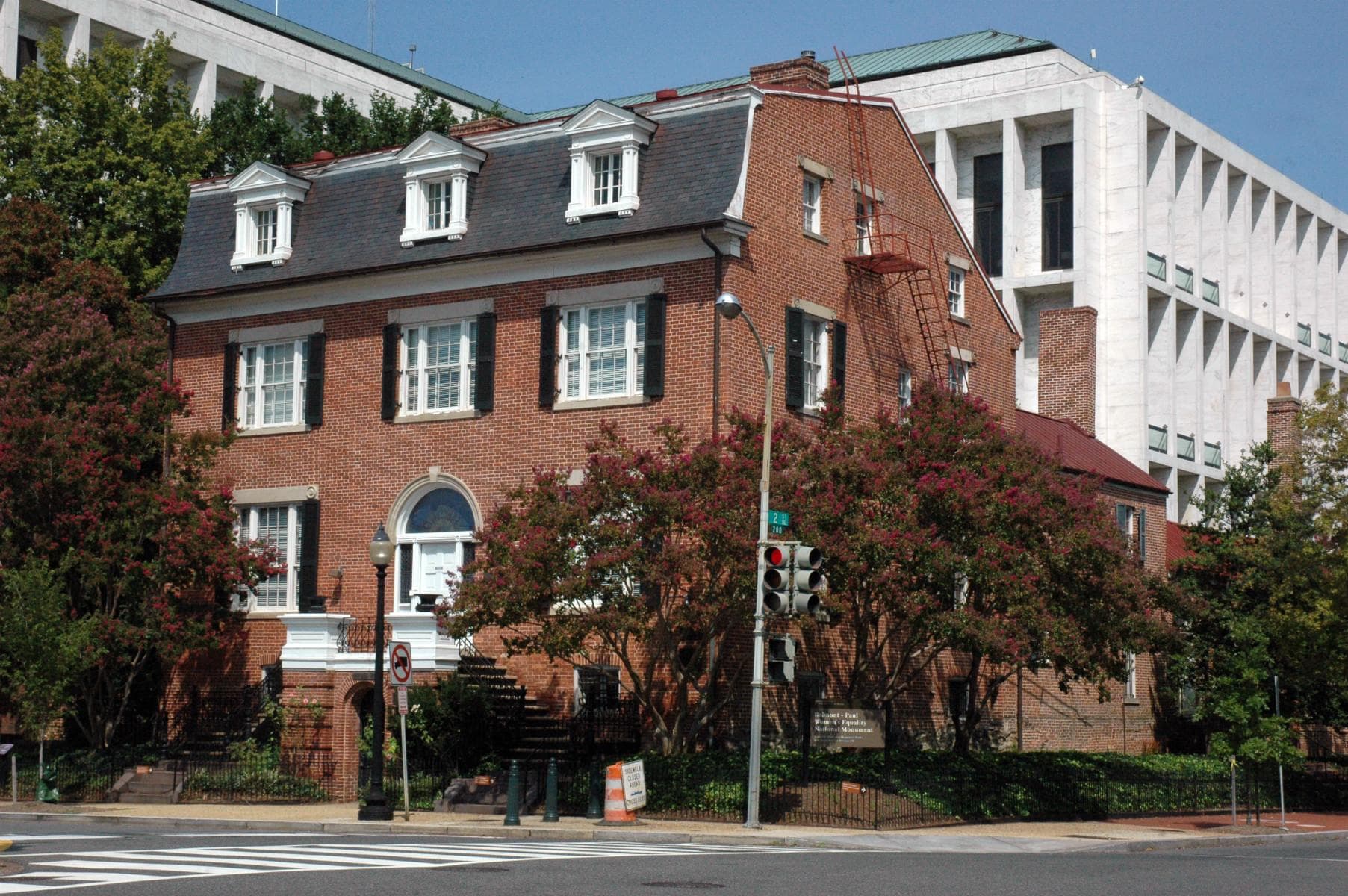
Belmont-Paul Women's Equality National Monument
District of Columbia
Tonight
🌓 65% moon
8.8 h fully dark
Crowds
low
Open today
Open
Entrance
Free entry
Home to the National Woman's Party for more than 90 years, this was the epicenter of the struggle for women's rights. From this house in the shadow of the U.S. Capitol and Supreme Court, Alice Paul and the NWP developed innovative strategies and tactics to advocate for the Equal Rights Amendment and equality for women. President Barack Obama designated the national monument on April 12, 2016.
Activities
Topics
No entrance fee.
Hours & seasons
Belmont-Paul Women's Equality National Monument is open Fridays, Saturdays and Sundays from 10 a.m. to 5 p.m.
Generally open:
winterspringsummerfallHours are reported by the park — verify before you go.
📞 202-441-7572
✉ bepa_info@nps.govConditions
Quietest months (fewer crowds): Jan, Oct
Typical crowds: low
Weather now: ⛅ Partly cloudy, 85°F
🌦️ 86°/71°
🌧️ 74°/61°
🌧️ 67°/58°
Typical monthly recreation visits · NPS avg 2023–2025 — orange months are the quietest by crowds.
Quietest months
Relative crowds by month — lighter is quieter; ringed months are the calmest by crowds.
Jan
13%
Feb
30%
Mar
100%
Apr
27%
May
26%
Jun
26%
Jul
34%
Aug
30%
Sep
37%
Oct
22%
Nov
38%
Dec
34%
Log a sky reading
Measured the sky with an SQM meter or app? Add your reading (16 = city glow … 22 = pristine). Opt in under “Travelers like you” to share it on the community leaderboard.
Visitor centers
Museum Information Desk
Accessibility
1 audio-described place(s)
Reported by the park — verify before you go.
Not an official safety source — always defer to NPS.gov and rangers for life-safety decisions.
By the numbers
A visual read on Belmont-Paul Women's Equality National Monument — its character, trails, sky, and weather.
Park fingerprint
How this park scores across the dimensions travelers care about.
3-day forecast
Daily high and low temperatures (°F).
People & stories
Figures tied to Belmont-Paul Women's Equality National Monument — each spans a cross-park journey.
Alva Belmont
— 19th Amendment, Women's History, Women's RightsAngelina Emily Grimké (Weld)
— Women's Rights, Women's History, Suffrage MovementAnita Pollitzer
— Nineteenth Amendment, 19th Amendment, Women's HistoryCrystal Eastman
— Suffrage Movement, Women's History, Labor HistoryDr. Alice Paul
— Women's History, Suffrage, 19th AmendmentInez Milholland
— Women's History, Suffrage Movement, SuffrageIris Calderhead Pratt
— Suffrage Movement, 19th Amendment, Guadalupe MountainsLucy Burns
— 19th Amendment, Women, Women's HistoryPassport stamps
Mark the stamps you've collected — they show in your memory and along your routes.
🎫 Museum Information Desk
Places to see
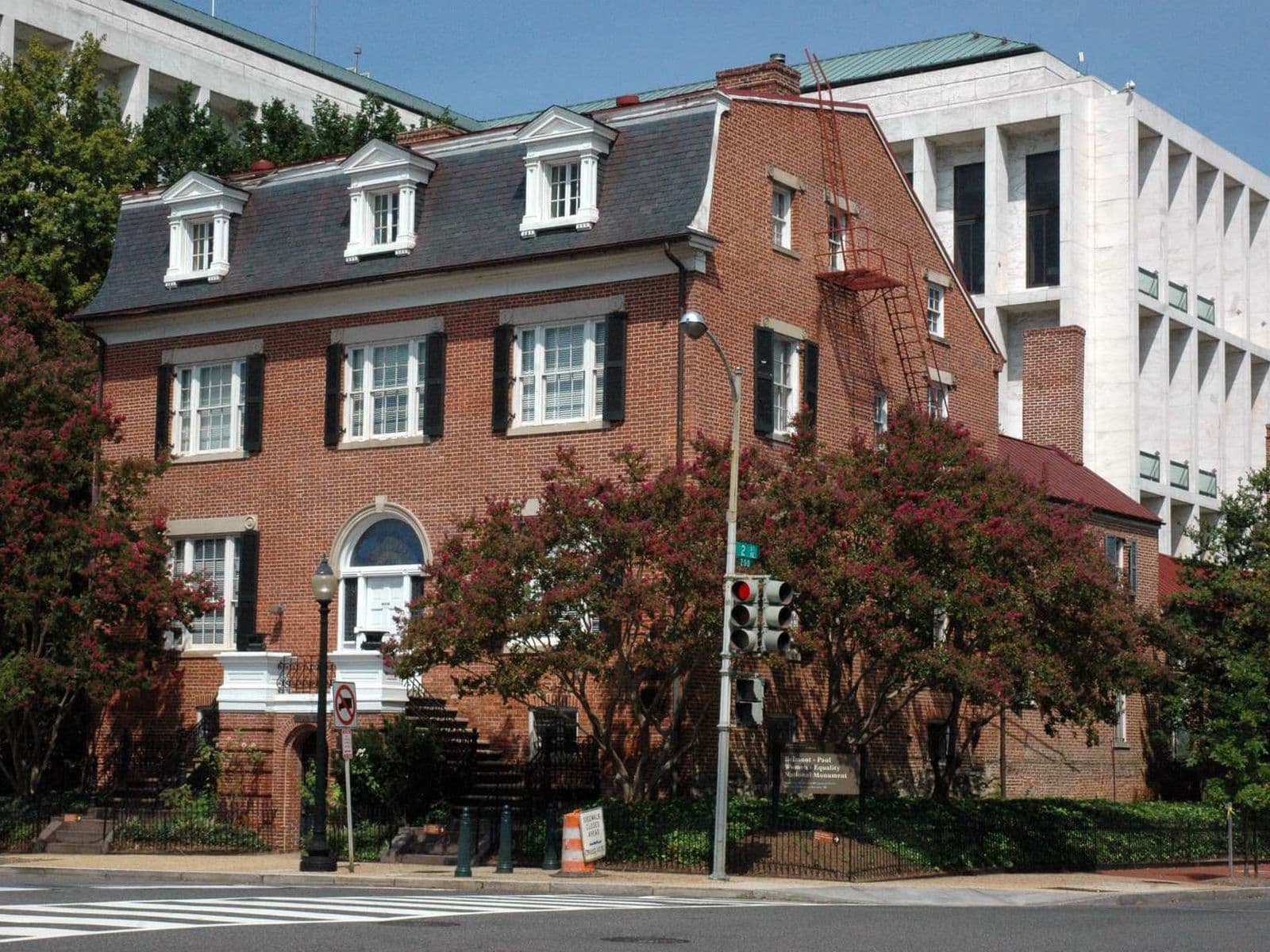
Belmont-Paul Women's Equality National Monument
audioAudio & media
🎧
🎬
🖼
Learn more
Today's visitors know the Georgia-style home on Capitol Hill as the Belmont-Paul Women’s Equality National Monument. The National Woman's Party knew it as a symbol of their proximity to political power and their perseverance as an organization. The NWP spent 40 years fighting Congress to keep their headquarters. As fierce protectors of the Belmont House, the NWP carried on a tradition of women as historic preservationists.
When Carrie Lane Chapman Catt was 13-years-old and living in rural Charles City, Iowa, she witnessed something that would help to decide the course of her life. Her family was politically active and on Election Day in 1872, Carrie’s father and some of the male hired help were getting ready to head into town to vote. She asked her mother why she wasn’t getting dressed to go too. Her parents laughingly explained to their daughter that women couldn’t vote.
Uncover the hidden history of World War I in the national parks!
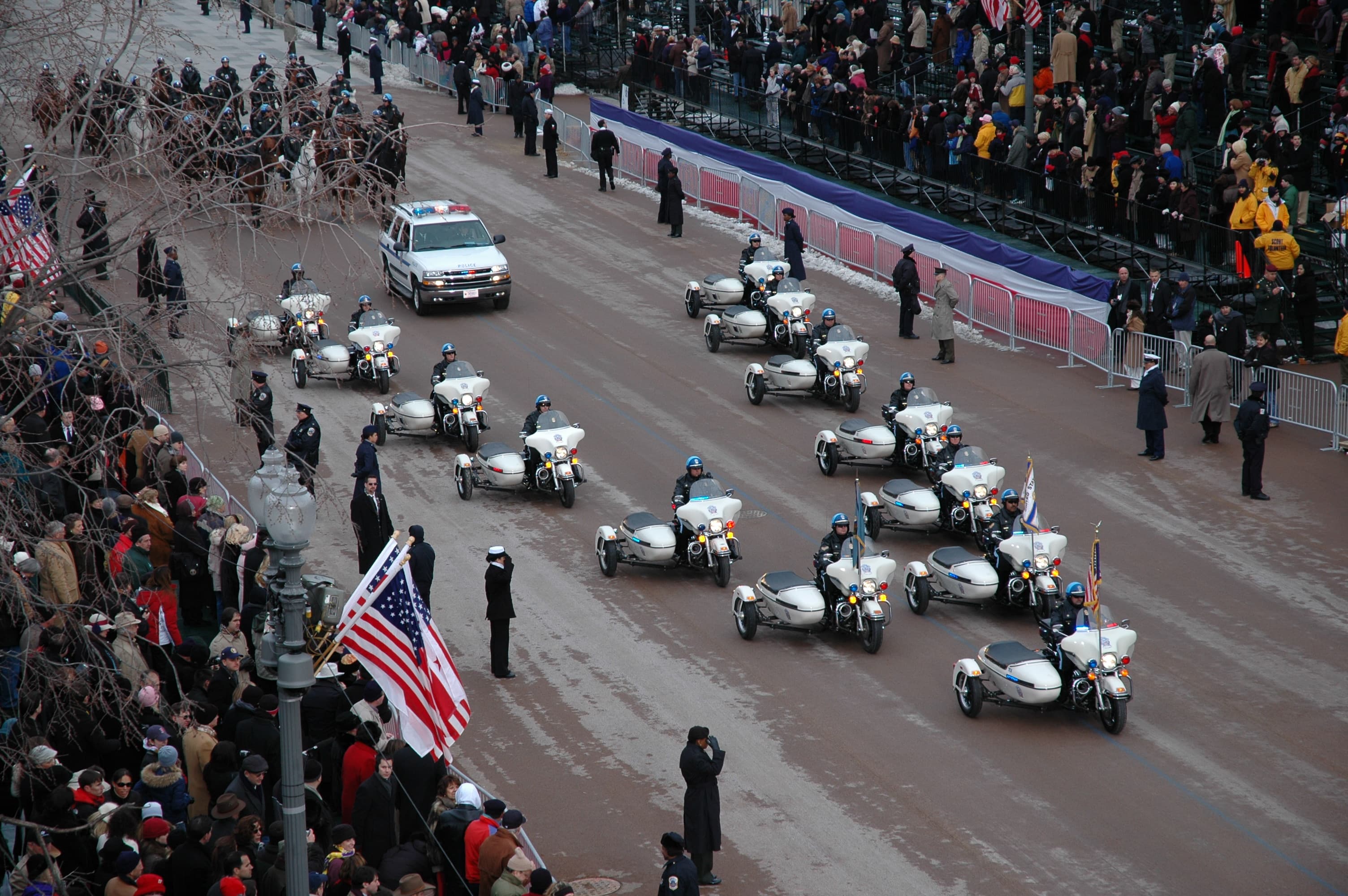
The Woman Suffrage Procession along Pennsylvania Avenue on March 3, 1913, the day before Woodrow Wilson's presidential inauguration, used pageantry to raise awareness about women's exclusion from the nation's political process. The publicity following the event re-energized the woman suffrage movement in the United States.
During my lifetime Black people were deeply entrenched in the struggle for voting rights. As a child of the 1960s I heard a constant emphasis on how important it was to vote. To make our voices heard. I went with my parents to polling places when they voted, where I was surrounded by adults who grew up in the Jim Crow South and knew that voting was not something to take for granted. Michelle Duster is the great-granddaughter of Ida B. Wells.
Prior to the 1830s, American antislavery organizations were formed and controlled by white men. This changed in December of 1833 when African American men were invited to participate at the first convention of the American Anti-Slavery Slavery Society (AASS) held in Philadelphia. Some women were also invited to the convention, but as spectators rather than as members. Excluding women from full participation was customary of the period’s social conventions.
Some abolitionist women found the confidence needed to reject social conventions and participate in public activities by denying the authority of clerical rules. Abolitionist feminists also found resolve to contradict gender roles in the abolitionist belief of the common humanity of all people. The belief in common humanity was used by abolitionists to argue for the definition of African American slaves as people, not property.
The abolition movement helped form and influence those who built and led the women’s rights movement. The beliefs and practices of the abolition movement provided a backdrop against which antislavery women could challenge gender roles and leave the woman’s sphere to enter the public sphere.
Ranger School
Park-grounded courses you can learn with the Ranger.
A New Home on Capitol Hill: Fighting for the Equal Rights Amendment
Open →
A Woman's Place Is In This House: Alice Paul and the Work For Women's Equality
Open →
Ain't I A Woman
Open →
Correspondents, Soldiers and Spies: Women in the U.S.-Mexican War
Open →
Lobbying for Equality: Examining the "Deadly Political Index" of the National Woman's Party
Open →
How Belmont-Paul Women's Equality National Monument connects
This park's activities, topics, location, and on-the-ground places — one hop in the graph. Drag to explore; click an activity, topic, or related park to follow it.
Park
Activity
Topic
State
VisitorCenter
PassportStamp
Similar parks
Share activities & topics with Belmont-Paul Women's Equality National Monument.