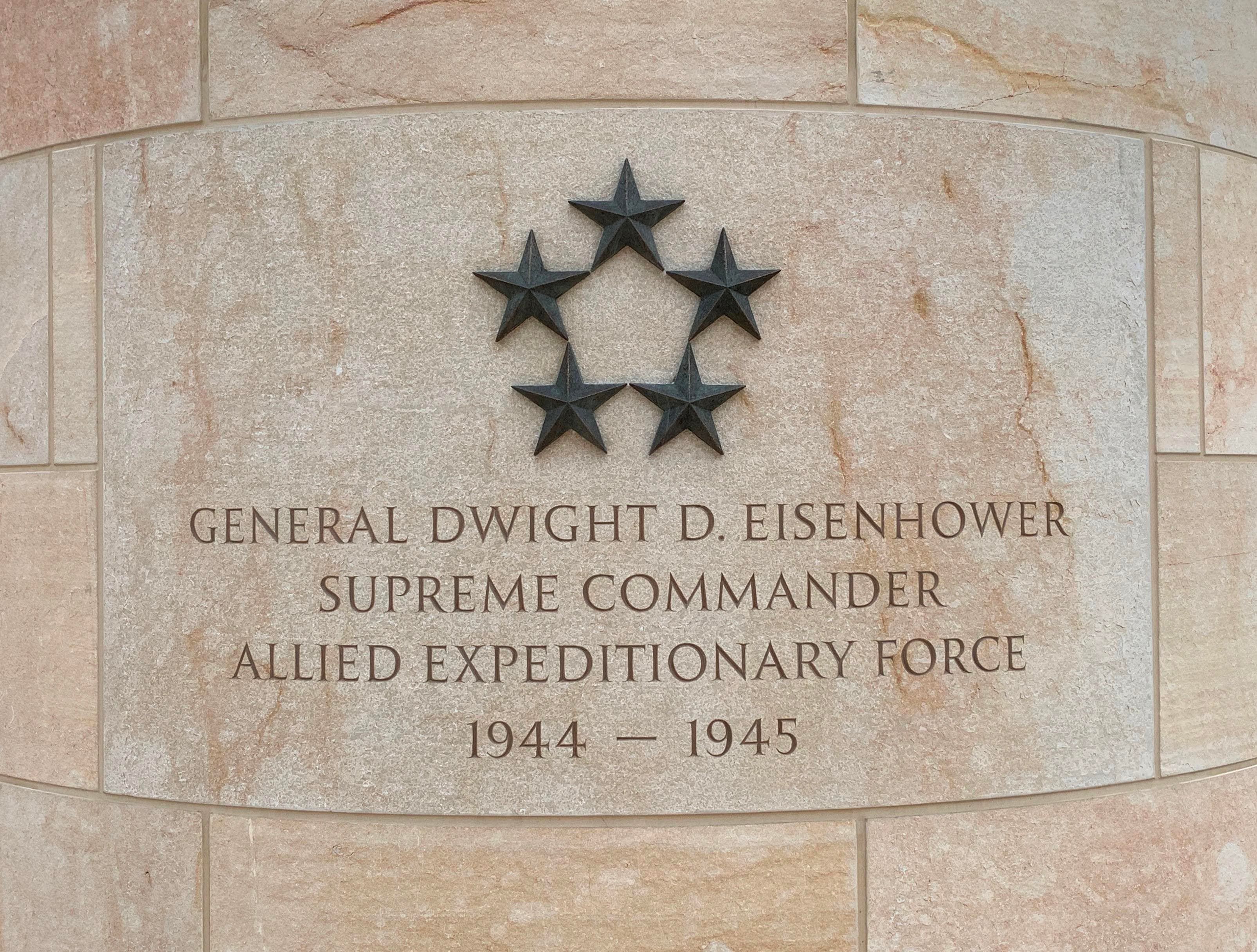
Dwight D. Eisenhower Memorial
District of Columbia
Tonight
🌓 65% moon
8.8 h fully dark
Crowds
low
Open today
Open
Entrance
Free entry
The Dwight D. Eisenhower Memorial tells the story of one of America's greatest leaders of the 20th century.
Activities
No entrance fee.
Hours & seasons
The sites of National Mall and Memorial Parks (other than the Washington Monument) are always open to the public. Restrooms, museums and elevators close in the evenings (check individual sites for hours)
Generally open:
winterspringsummerfallHours are reported by the park — verify before you go.
📞 2024266841
✉ national_mall@nps.govConditions
Quietest months (fewer crowds): Jan, Feb, Dec
Typical crowds: low
Weather now: ⛅ Partly cloudy, 85°F
🌦️ 86°/73°
🌧️ 74°/62°
🌧️ 67°/59°
Typical monthly recreation visits · NPS avg 2023–2025 — orange months are the quietest by crowds.
Quietest months
Relative crowds by month — lighter is quieter; ringed months are the calmest by crowds.
Jan
29%
Feb
36%
Mar
100%
Apr
99%
May
92%
Jun
79%
Jul
70%
Aug
65%
Sep
57%
Oct
72%
Nov
55%
Dec
39%
Log a sky reading
Measured the sky with an SQM meter or app? Add your reading (16 = city glow … 22 = pristine). Opt in under “Travelers like you” to share it on the community leaderboard.
Things to do
World War II Weekend at Eisenhower National Historic Site
Accessibility
5 audio-described place(s)
Reported by the park — verify before you go.
Not an official safety source — always defer to NPS.gov and rangers for life-safety decisions.
By the numbers
A visual read on Dwight D. Eisenhower Memorial — its character, trails, sky, and weather.
Park fingerprint
How this park scores across the dimensions travelers care about.
Trail difficulty
Difficulty mix across this park's trails.
3-day forecast
Daily high and low temperatures (°F).
People & stories
Figures tied to Dwight D. Eisenhower Memorial — each spans a cross-park journey.
Doud Dwight Eisenhower
— Eisenhower Family, Eisenhower National Historic Site, Dwight D. Eisenhower MemorialDwight D. Eisenhower
— Presidents, Eisenhower National Historic Site, WWIIE. Frederic Morrow
— Civil Rights, Eisenhower, Eisenhower AdministrationField Marshal Bernard Law Montgomery
— World War Ii, Eisenhower, General EisenhowerJohn Eisenhower
— Veterans, Eisenhower, Eisenhower AdministrationJohn and Delores Moaney
— Eisenhower National Historic Site, Eisenhower Family, VeteransPrime Minister Jawaharlal Nehru
— Diplomacy, President Eisenhower, Eisenhower National Historic SiteWinston S. Churchill
— Winston Churchill, Great Britain, AlliesPassport stamps
Mark the stamps you've collected — they show in your memory and along your routes.
🎫 Dwight D. Eisenhower Memorial
Places to see
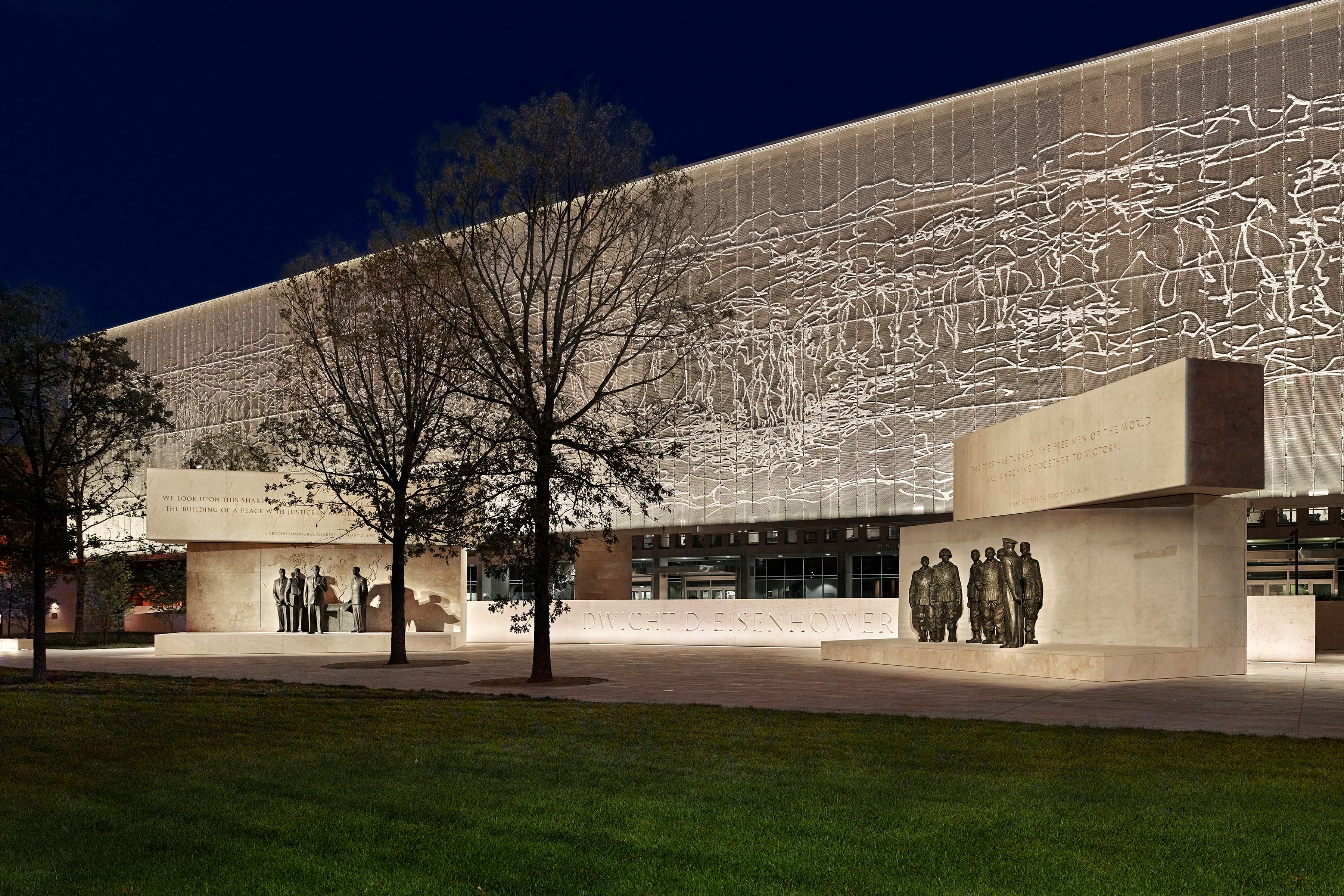
Dwight D. Eisenhower Memorial
audio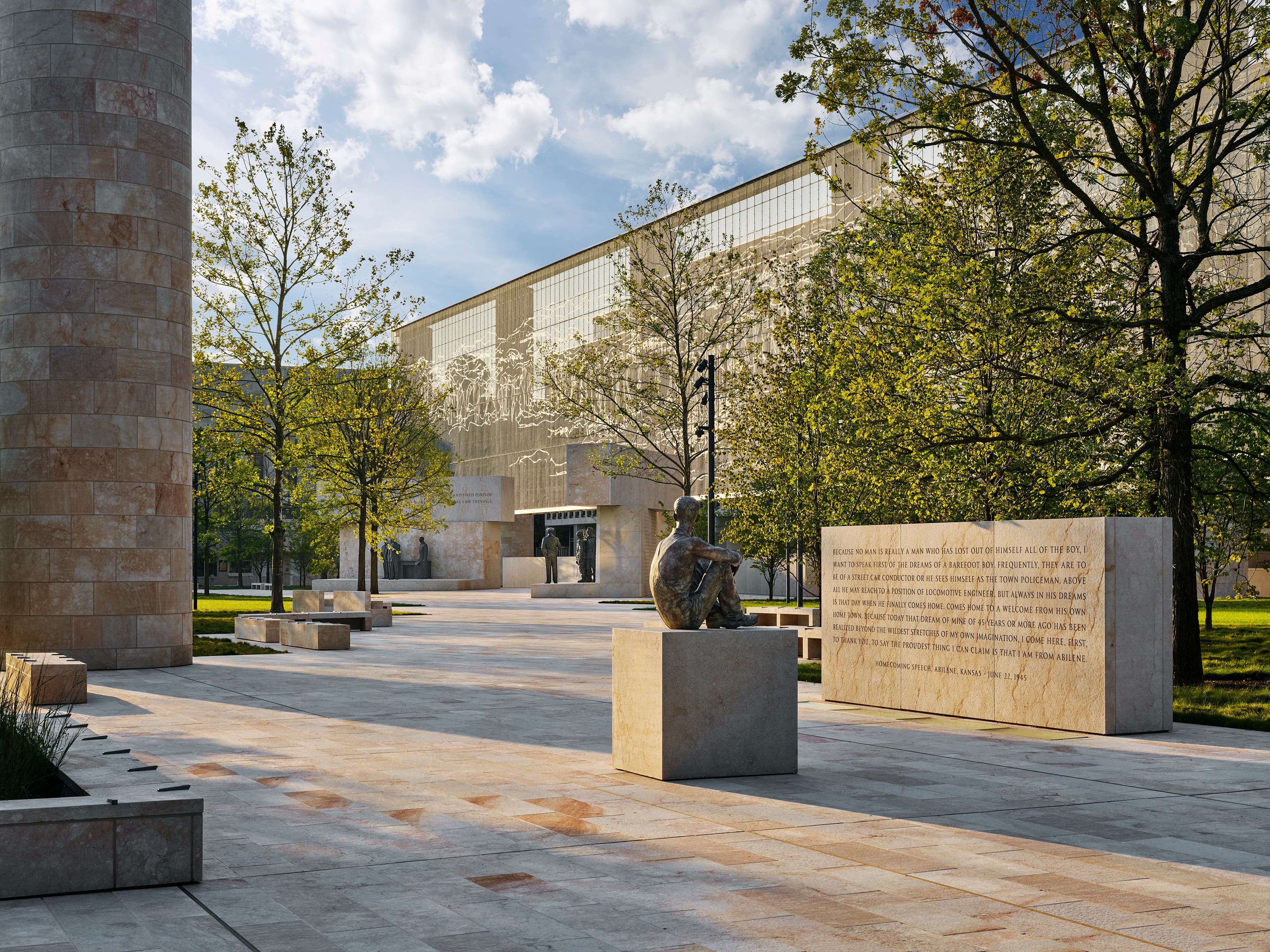
Dwight D. Eisenhower Memorial: Homecoming Speech
audio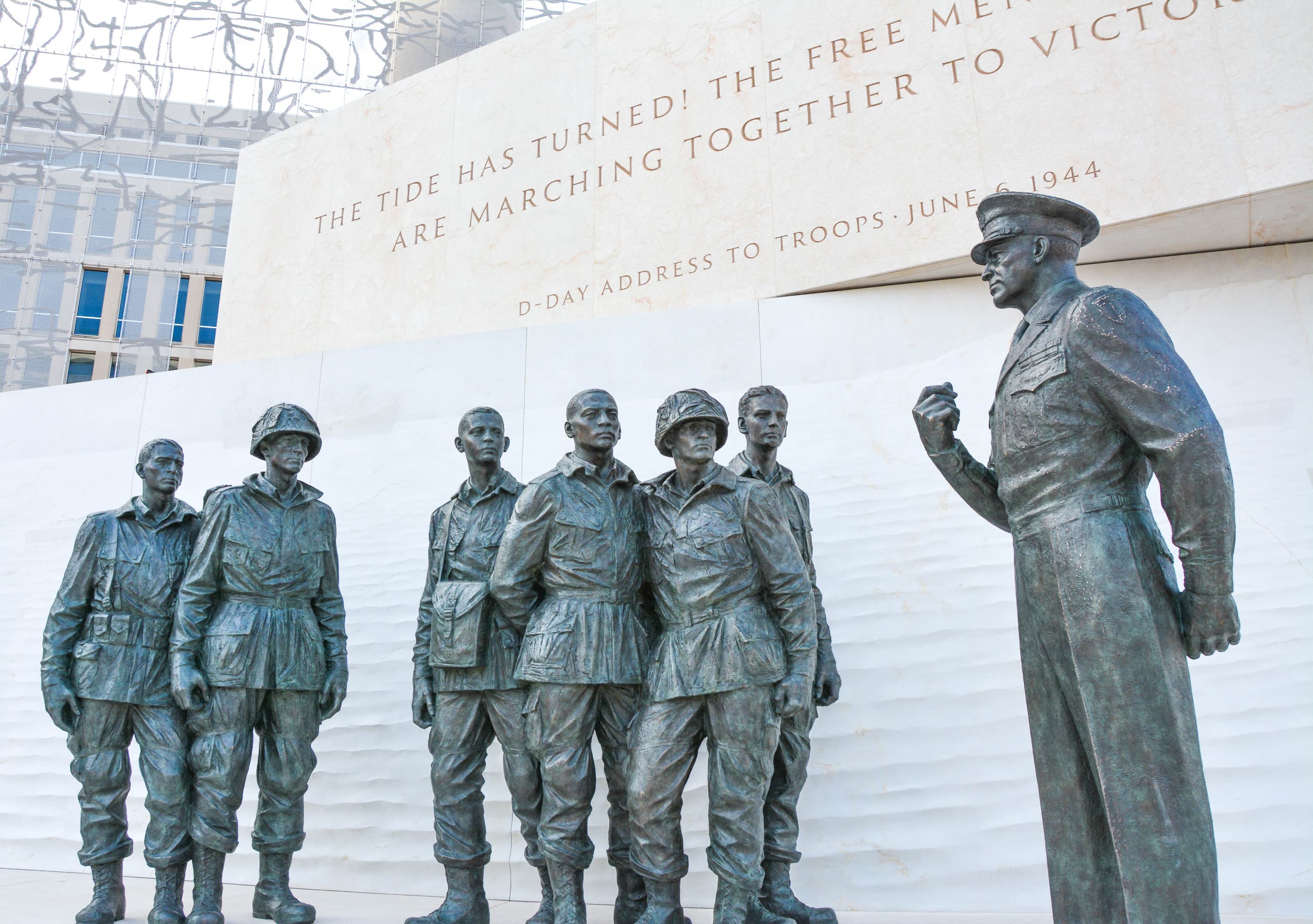
Dwight D. Eisenhower Memorial: Honoring the General
audio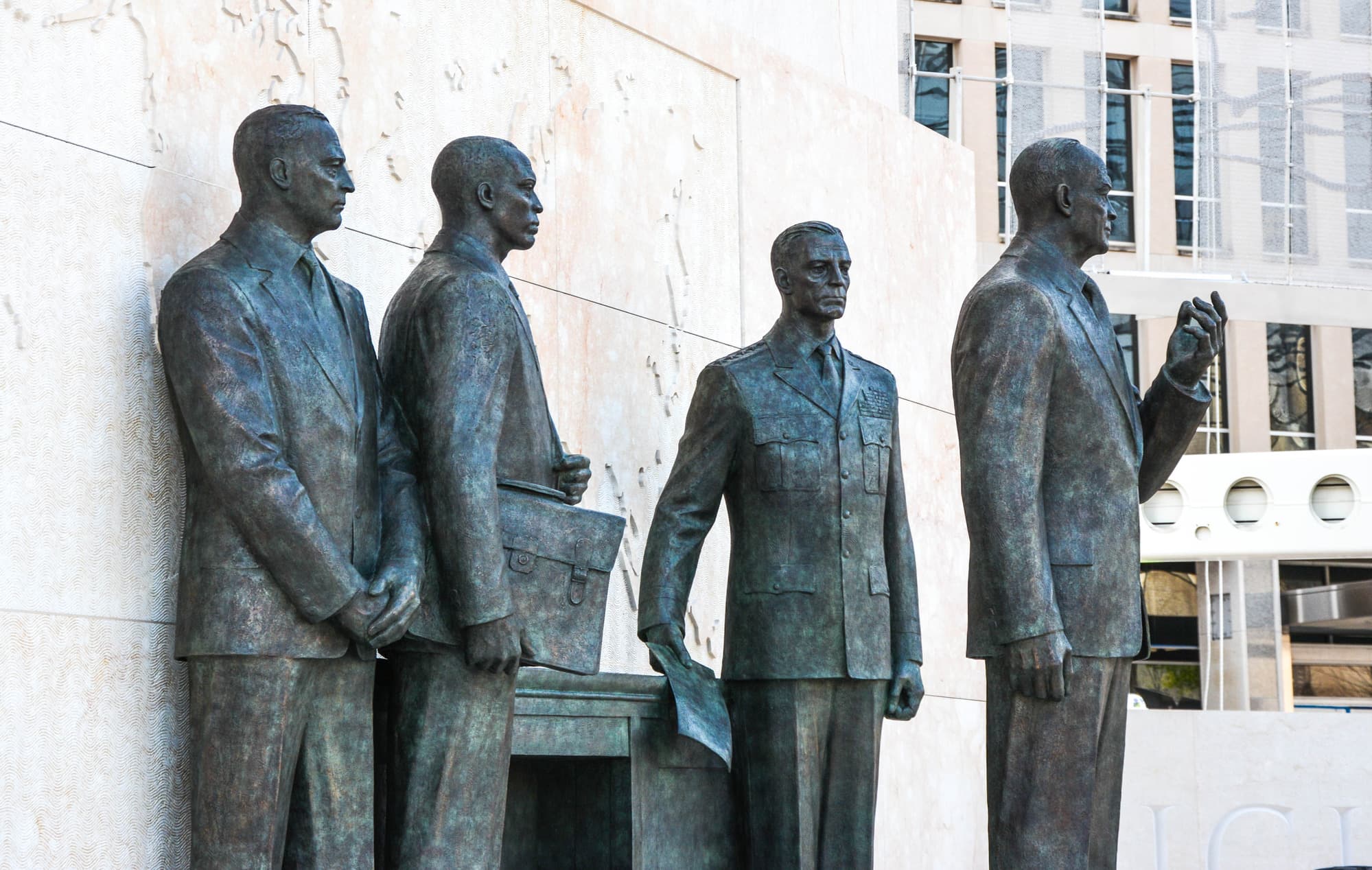
Dwight D. Eisenhower Memorial: Honoring the President
audio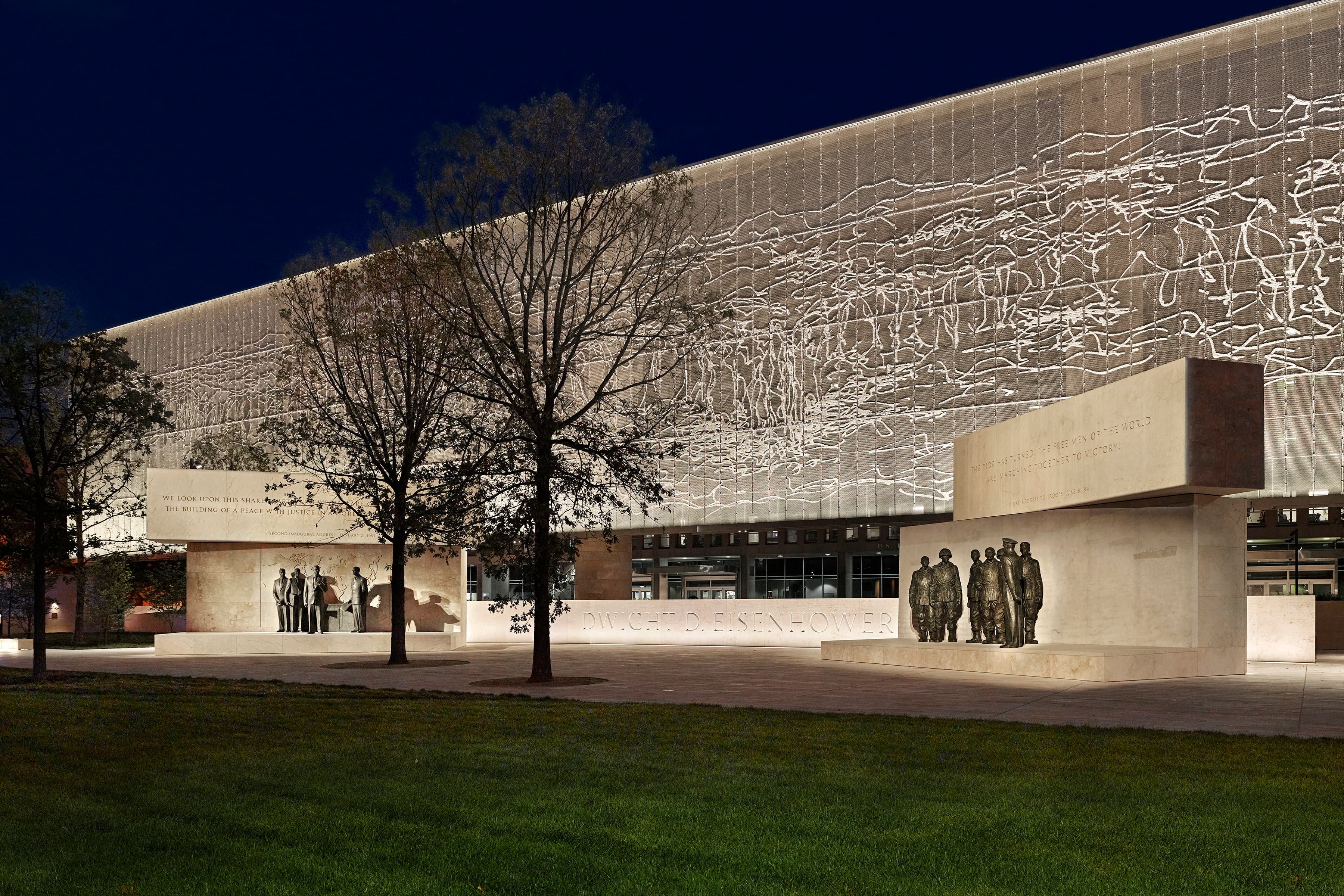
Dwight D. Eisenhower Memorial: Tapestry
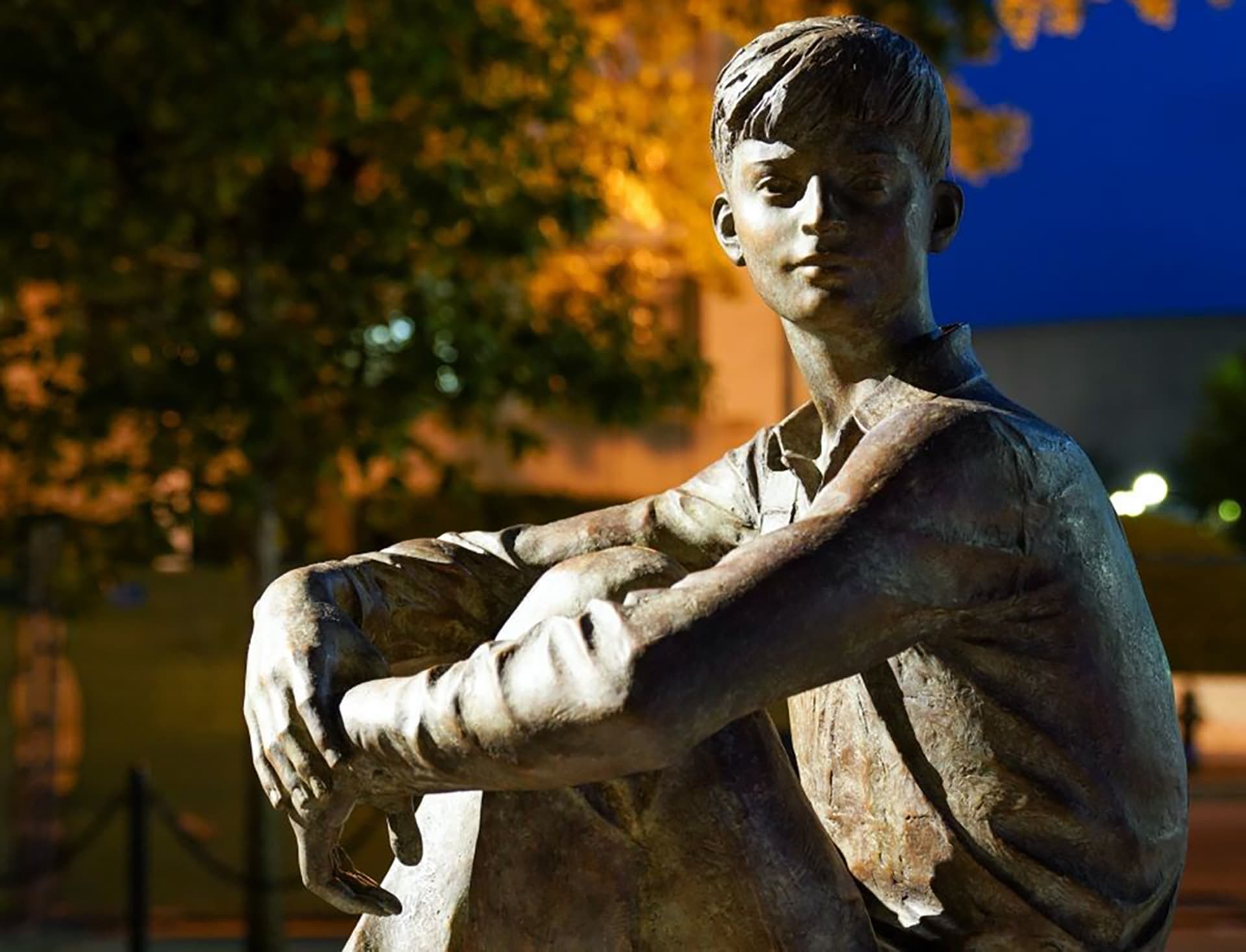
Dwight D. Eisenhower Memorial: The Young Man
audioAudio & media
🎧 Dwight D. Eisenhower - Guildhall Address, June 12, 1945 ↗ · 11 mintranscript
🎧 Dwight D. Eisenhower - Farewell Address, January 17, 1961 ↗ · 16 mintranscript
🎬
🖼
Learn more
On January 20, 1953, Dwight D. Eisenhower took the oath of office as the 34th President of the United States. In his Inaugural Address that day, Eisenhower laid out the challenges facing the United States, as well as ways he believed the American people could rise to the occasion and meet them.
It is a routine yet special occurrence in American history—one political leader handing over the most powerful office in the land—the Presidency of the United States—to another. In some cases, this transfer is done amongst friends and political allies. In others, it is amongst political rivals. On January 20, 1953, such a transfer of power occurred, when President Harry Truman passed the torch of leadership to incoming President Dwight D. Eisenhower.
A President-elect and a Corporal sit down together for lunch in the cold wintry mountains of Korea. Five days later, one is killed in action, and the other left wondering what he can do to prevent more deaths in an already far too costly war.
Dwight Eisenhower received many letters from citizens on important issues. In 1957 and 1958, baseball star and Civil Rights activist Jackie Robinson wrote to President Eisenhower about his stance on Civil Rights, voicing his desires for stronger Federal action to protect the rights of African Americans in the United States. His letter of May 1958 expresses the frustration Robinson felt at what he considered to be Eisenhower's slow pace on issues pertaining to Civil Rights.
During World War II, while Dwight Eisenhower ascended to high command and fame, he relied heavily upon his wife, Mamie. Mamie Eisenhower served in her own way during the war, persevering through trials and tribulations to support her husband and her country.
Dwight Eisenhower's ability to manage multiple commanders and forces did not only apply to ground troops in World War II. Managing the war in the skies above Europe proved equally as important and challenging for Eisenhower and the Allies. Explore this story further here.
E. Frederic Morrow, the first ever African American to hold an executive position in the White House, worked for Dwight Eisenhower as an Administrative Officer for Special Projects against the backdrop of the Civil Rights Era. In this position, he confronted racism both personally and professionally and often found himself frustrated and even angered at what he called Eisenhower's "lukewarm stand on civil rights."
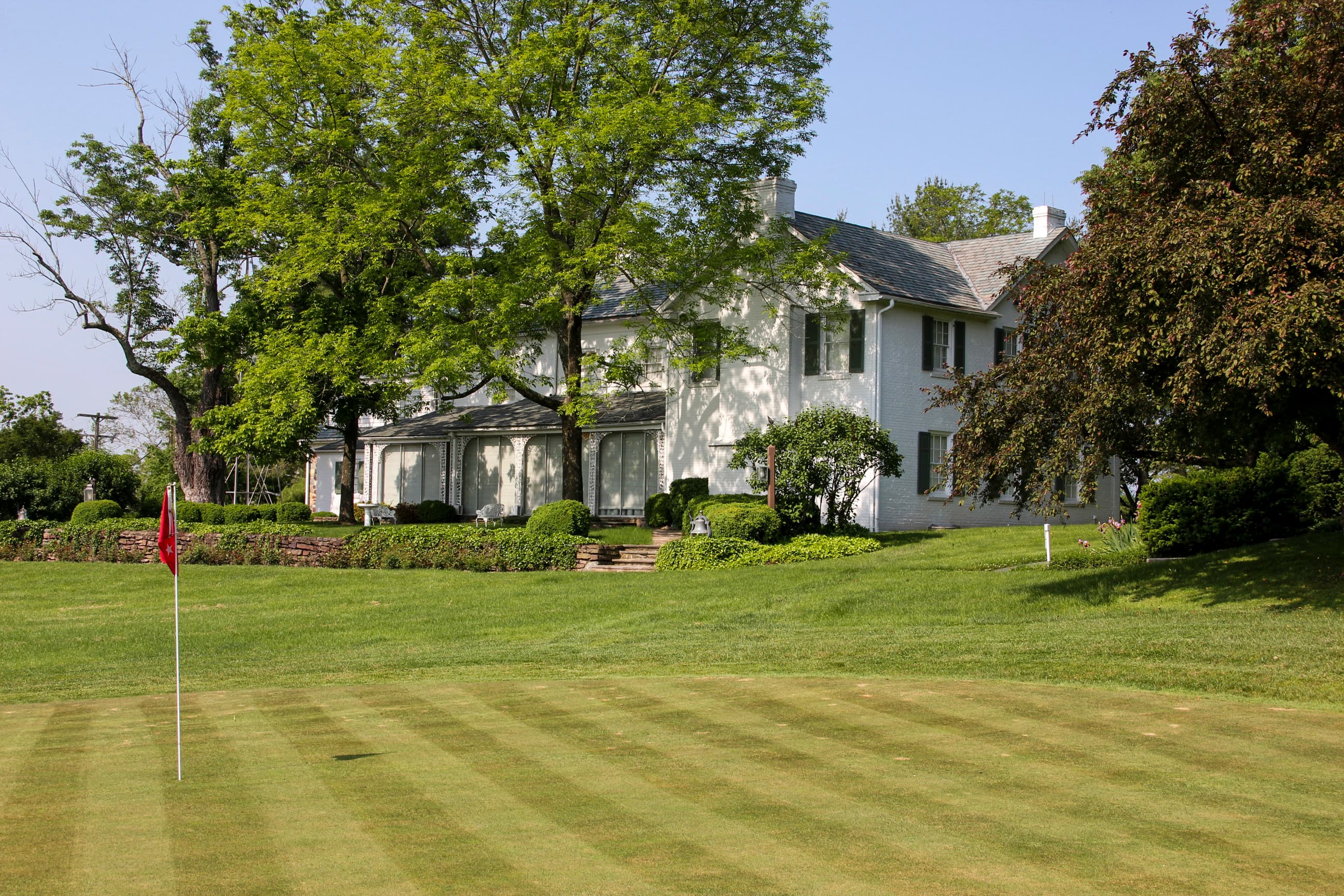
The Korean War was one of the defining events of Dwight Eisenhower's presidency. Learn about the multiple ways that conflict and time period are represented through this look at the items on display inside the historic Eisenhower home.
How Dwight D. Eisenhower Memorial connects
This park's activities, topics, location, and on-the-ground places — one hop in the graph. Drag to explore; click an activity, topic, or related park to follow it.
Park
Activity
Topic
State
PassportStamp
ThingToDo
Similar parks
Share activities & topics with Dwight D. Eisenhower Memorial.