Tuskegee Institute National Historic Site
Alabama
Tonight
🌓 65% moon
9.1 h fully dark
Crowds
low
Open today
Closed
Entrance
Free entry
Accessible Parking Available
Accessible parking is available at the George Washington Carver Museum and The Oaks. For George Washington Carver Museum, after receiving your visitor pass, enter Tuskegee University through Lincoln Gates on Booker T. Washington Boulevard. Pass Margaret Murray Washington Hall and the Kellogg Hotel and Conference Center, then turn right to the parking garage. Accessible parking for The Oaks is at 1200 West Montgomery Road. For assistance, call Sheryl Buchanan at (334) 421-2153.
Visitor Pass Needed to Visit George Washington Carver Museum
All visitors to Tuskegee University, including those visiting the George Washington Carver Museum located on campus, are required to obtain a visitor pass before entering. This policy is part of the university's safety and security procedures. Visitor passes are issued by Tuskegee University Public Safety. Stop by the Campus Public Safety building upon arrival to receive your pass at 1103 West Montgomery Road, Tuskegee, AL 36088.
Official NPS alert →New Policy on Fires and Lighting
Please be advised that a new policy is now in effect regarding the lighting and maintaining of fires within the park. To read the full details, including specific regulations and guidelines, please refer to the Superintendent's Compendium.
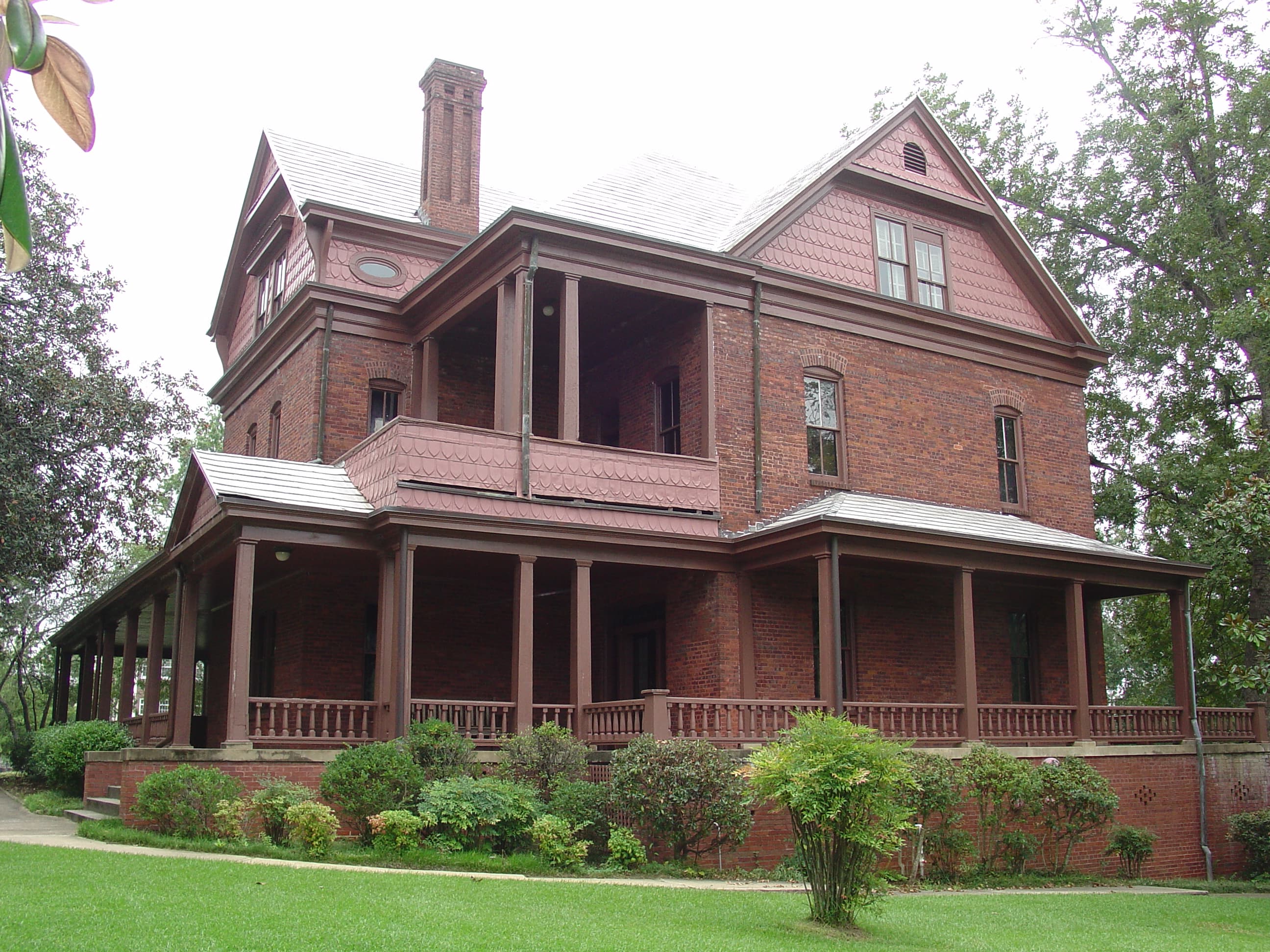
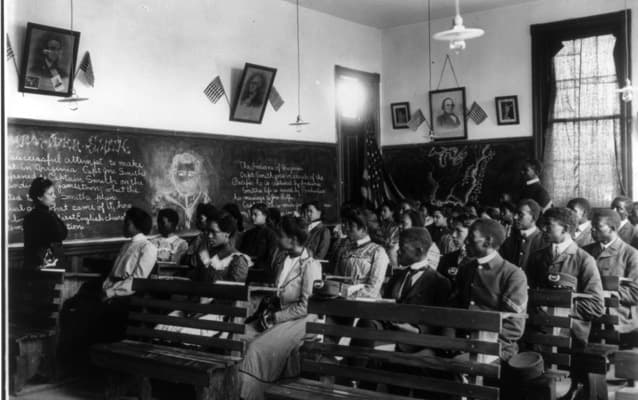
Official NPS alert →In 1881, Booker T. Washington arrived in Alabama and started building Tuskegee Institute both in reputation and literally brick by brick. He recruited the best and the brightest to come and teach here including George Washington Carver who arrived in 1896. Carver’s innovations in agriculture, especially with peanuts, expanded Tuskegee’s standing throughout the country. The story continues….
No entrance fee.
Hours & seasons
Tuskegee Insitute National Historic Site, admission is free for all visitors.
Generally open:
winterspringsummerfallHours are reported by the park — verify before you go.
📞 (334) 727-3200
✉ sheryl_buchanan@nps.govConditions
Quietest months (fewer crowds): Jan, Oct, Nov, Dec
Typical crowds: low
Weather now: ☀️ Clear, 90°F
⛅ 91°/71°
🌦️ 94°/72°
🌦️ 97°/72°
Typical monthly recreation visits · NPS avg 2023–2025 — orange months are the quietest by crowds.
Quietest months
Relative crowds by month — lighter is quieter; ringed months are the calmest by crowds.
Jan
39%
Feb
93%
Mar
97%
Apr
100%
May
98%
Jun
76%
Jul
55%
Aug
62%
Sep
50%
Oct
40%
Nov
29%
Dec
18%
Log a sky reading
Measured the sky with an SQM meter or app? Add your reading (16 = city glow … 22 = pristine). Opt in under “Travelers like you” to share it on the community leaderboard.
Visitor centers
Tuskegee Institute National Historic Site Visitor Center
Accessibility
Reported by the park — verify before you go.
Parking
Tuskegee Institute NHS Parking Lot
Not an official safety source — always defer to NPS.gov and rangers for life-safety decisions.
By the numbers
A visual read on Tuskegee Institute National Historic Site — its character, trails, sky, and weather.
Park fingerprint
How this park scores across the dimensions travelers care about.
3-day forecast
Daily high and low temperatures (°F).
People & stories
Figures tied to Tuskegee Institute National Historic Site — each spans a cross-park journey.
Frances Benjamin Johnston
— Women's History, Photographer, Mammoth CaveGeorge Washington Carver
— Inventor, Scientist, Tuskegee Institute National Historic SiteHenry Grant Mayberry
— Tuskegee Institute, Education, African AmericanJust as Well as He: Adella Hunt Logan
— Women's History, African American History, 19th AmendmentMargaret Murray Washington
— Black Womens Clubs, Black Womanhod Series, BostonSarah (Hunt) Rogers
— Tuskegee Institute, Education, African American HistoryPassport stamps
Mark the stamps you've collected — they show in your memory and along your routes.
🎫 Tuskegee Institute National Historic Site Visitor Center
Places to see
Alabama: Tuskegee Institute National Historic Site
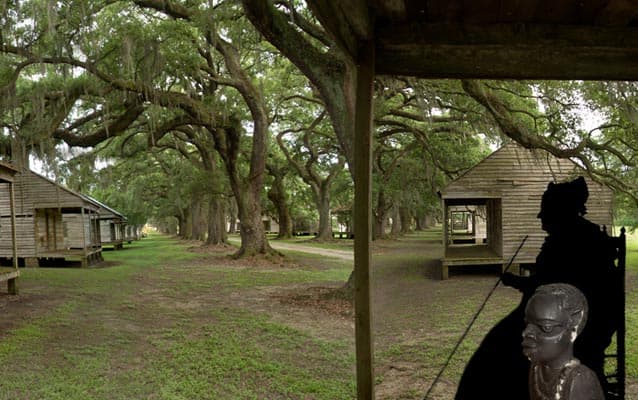
The National Underground Railroad Network to Freedom
Audio & media
🎧
🎬
🖼
Learn more
Although the abolition of slavery emerged as a dominant objective of the Union war effort, most Northerners embraced abolition as a practical measure rather than a moral cause. The war resolved legally and constitutionally the single most important moral question that afflicted the nascent republic, an issue that prevented the country from coalescing around a shared vision of freedom, equality, morality, and nationhood.
As a child growing up in the South during the 1950s and 1960s, Judy Forte’s life was heavily influenced by the US civil rights movement. She was only 11 years old when Dr. Martin Luther King, Jr. was assassinated. Four decades later she became the first African American woman superintendent at Martin Luther King, Jr. National Historical Park—and she's not done yet.
David Williston, recognized as the first professionally-trained African American landscape architect, left a lasting legacy through his work as a college campus planner and horticulturalist. During his tenure as superintendent of grounds at Tuskegee University from 1910 to 1929, he oversaw the development of the campus. Williston guided the landscape design around The Oaks, home of Booker T. Washington.
The South was the nemesis of the woman suffrage movement, the long-term, impassioned adversary that, in 1920, almost kept the Nineteenth Amendment from being ratified. Regional hostility to the women’s rights movement long delayed the development of a southern suffrage movement and precluded state suffrage victories. Powerful resistance from white southern Congressmen and Senators for many years precluded Congressional approval of a federal woman suffrage amendment.
During Reconstruction, the Federal government pursued a program of political, social, and economic restructuring across the South-including an attempt to accord legal equality and political power to former slaves. Reconstruction became a struggle over the meaning of freedom, with former slaves, former slaveholders and Northerners adopting divergent definitions. Faced with increasing opposition by white Southerners and some Northerners, however, the government abandoned effor
Meet Floyd Myers, who is the Chief of Business Development and Partnerships for the National Parks of New York Harbor. He was previously the acting Deputy Superintendent at Martin Luther King Jr. National Historical Park and worked at several other parks before that, including the Tuskegee Airmen National Historic Site, the Tuskegee Institute National Historic Site, Selma to Montgomery National Historic Site, Booker T. Washington National Historic Site, and others.
Begun as a purely military effort with the limited political objectives of reunification (North) or independence (South), the Civil War transformed into a social, economic and political revolution with unforeseen consequences. As the war progressed, the Union war effort steadily transformed from a limited to a hard war; it targeted not just Southern armies, but the heart of the Confederacy's economy, morale, and social order-the institution of slavery.
America's cultural memories of the Civil War are inseparably intertwined with that most "peculiar institution" of American history - racial slavery. But in the struggle over Civil War memory which began as soon as the war was over and continues to this day, rival cultural memories of reconciliation and white supremacy have often prevailed. Therein lies the challenge as the National Park Service - a public agency - seeks to "provide understanding" of the Civil War era's lasting impact upon the development of our nation.
How Tuskegee Institute National Historic Site connects
This park's activities, topics, location, and on-the-ground places — one hop in the graph. Drag to explore; click an activity, topic, or related park to follow it.
Park
Activity
Topic
State
VisitorCenter
PassportStamp
ParkingLot
Trail
Alert
Similar parks
Share activities & topics with Tuskegee Institute National Historic Site.